5 Signs Your Business Needs Process Automation
24 September 2026
3 min read
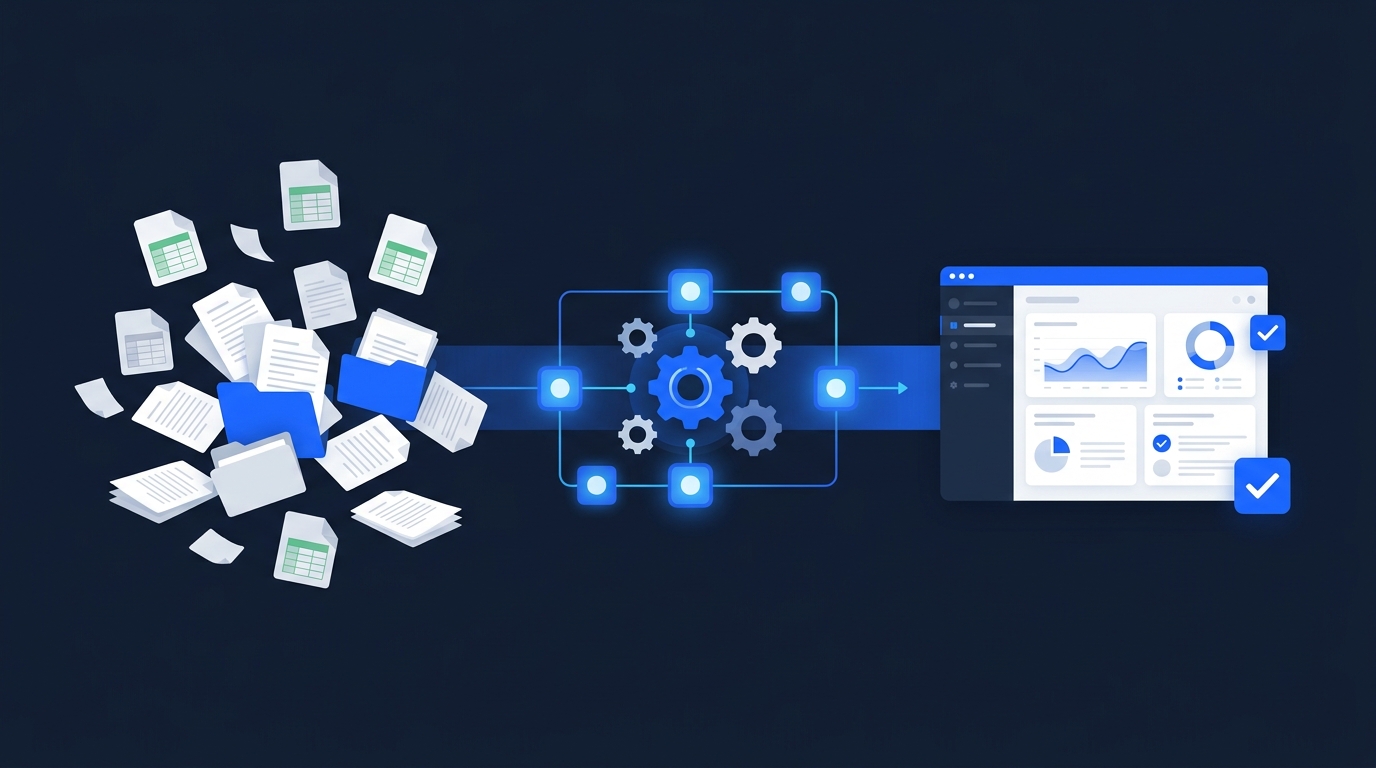
Many businesses run on the same manual routines for years, and because "it has always been done this way," they rarely question them. Yet the hidden cost of manual work grows every month. If any of the following sounds familiar, it may be time to think about process automation.
1. Your team spends too much time on repetitive tasks
Copying data between files, sending reminders by hand, compiling weekly reports, and issuing invoices are tasks that repeat exactly the same way every time. Each hour your skilled people spend on them is an hour taken away from creativity, sales, and customer service. Any task with clear rules is a good candidate for automation.
2. Human errors and inconsistent data keep piling up
A mistyped number, a forgotten step, or several conflicting versions of the same file are all by-products of manual work. These errors are usually discovered late, and fixing them costs more than preventing them. Automation runs every step exactly as defined and removes mistakes caused by fatigue or distraction.
3. Your information is scattered everywhere
Some data lives in spreadsheets, some in messaging apps, some in email, and some only in your colleagues' heads. When finding a simple piece of information means chasing several people, you lack an integrated system. Digitalization and software integration give everyone a single, always up-to-date source of truth.
4. Approvals and follow-ups have become bottlenecks
Leave requests, purchase approvals, permits, and contract reviews can easily get lost or stuck in a queue when handled on paper or in scattered chats. An automated workflow shows who currently holds each request, when a response is due, and what happens if it is delayed.
5. Growing the business has become harder than it should be
If every increase in customers or orders forces you to add staff at the same rate, your processes don't scale. A healthy business should be able to grow without costs growing at the same pace. Automation makes that possible.
Where should you start?
You don't need to change everything at once. We suggest this path:
Map your current processes and mark those that consume the most time and cause the most errors.
Start with one small, high-frequency process so you can see results quickly.
Measure time and error rates before and after automation to make the return on investment clear.
Use custom software for your organization's unique needs, so the system fits your workflow exactly.
Conclusion
Automation is not about replacing people; it is about freeing them from work that machines do better. If you recognize even one of the signs above in your business, the sooner you act, the better.
As specialists in process automation, enterprise software development, and system digitalization, we are ready to design and implement the right solution for your business. Get in touch with us for an initial consultation.
1. Your team spends too much time on repetitive tasks
Copying data between files, sending reminders by hand, compiling weekly reports, and issuing invoices are tasks that repeat exactly the same way every time. Each hour your skilled people spend on them is an hour taken away from creativity, sales, and customer service. Any task with clear rules is a good candidate for automation.
2. Human errors and inconsistent data keep piling up
A mistyped number, a forgotten step, or several conflicting versions of the same file are all by-products of manual work. These errors are usually discovered late, and fixing them costs more than preventing them. Automation runs every step exactly as defined and removes mistakes caused by fatigue or distraction.
3. Your information is scattered everywhere
Some data lives in spreadsheets, some in messaging apps, some in email, and some only in your colleagues' heads. When finding a simple piece of information means chasing several people, you lack an integrated system. Digitalization and software integration give everyone a single, always up-to-date source of truth.
4. Approvals and follow-ups have become bottlenecks
Leave requests, purchase approvals, permits, and contract reviews can easily get lost or stuck in a queue when handled on paper or in scattered chats. An automated workflow shows who currently holds each request, when a response is due, and what happens if it is delayed.
5. Growing the business has become harder than it should be
If every increase in customers or orders forces you to add staff at the same rate, your processes don't scale. A healthy business should be able to grow without costs growing at the same pace. Automation makes that possible.
Where should you start?
You don't need to change everything at once. We suggest this path:
Map your current processes and mark those that consume the most time and cause the most errors.
Start with one small, high-frequency process so you can see results quickly.
Measure time and error rates before and after automation to make the return on investment clear.
Use custom software for your organization's unique needs, so the system fits your workflow exactly.
Conclusion
Automation is not about replacing people; it is about freeing them from work that machines do better. If you recognize even one of the signs above in your business, the sooner you act, the better.
As specialists in process automation, enterprise software development, and system digitalization, we are ready to design and implement the right solution for your business. Get in touch with us for an initial consultation.